■ ■ In charting its development blueprint for the next five years, China is positioning tech self-reliance as a strategic underpinning. This represents a necessary and astute choice for a manufacturing powerhouse seeking to secure sustained growth that powers a dynamic and inclusive global economy.
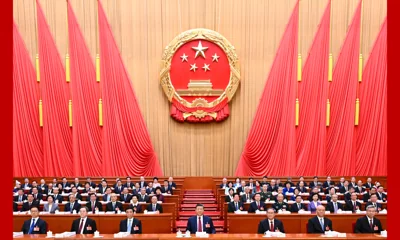
Moving fast to achieve greater self-reliance and strength in science and technology has been written into China’s government work report this year and the draft outline of the 15th Five-Year Plan (2026-2030), which were submitted Thursday to the country’s top legislature.
Looming large in this equation is an external tech blockade. China answered the squeeze by hitting the gas on home-grown, controllable core technologies while pioneering fresh frontiers in open-source AI ecosystems, quantum technology and new energy.
This is not a practice unique to China. Fortifying resilience and agility through sovereign capability is ascending the policy agenda worldwide — a bid to develop armor against supply chain ruptures and geopolitical turbulence.
However, China’s self-reliance strategy is far from a makeshift reaction driven by an « impact-response » scenario. It is, instead, a proactive and determined choice wired into China’s goal of building a strong modern socialist country. Outside pressure has merely fast-forged what was already in the smelting.
For a while, China’s growth was anchored in low-margin manufacturing, energy-guzzling and smokestack industries, and a property sector boom, a formula unsustainable in the long run. As the world’s manufacturing giant pivots toward retooling economic engines, chronic dependence on some imported core technologies is threatening to undermine its industrial upgrading and sustained growth.
The experience of all latecomer economies has shown that core technologies cannot be bought or begged for. The key to technological innovation lies in achieving independence and control over these critical capabilities. A nation failing to forge them at home can miss the arc of history. No ambitious country accepts such a fate.
Now, Chinese policymakers are betting big on quality over quantity, cultivating new quality productive forces as the central pillar of their high-quality development agenda.
Their confidence stems from a formidable, though not flawless, foundation. The credentials are tangible: the world’s largest cohort of STEM graduates, a dynamic and vast digital consumer market that fuels innovation, and leading positions in areas like 5G, quantum communication and drones. China’s homegrown chips, though still trailing behind the cutting edge, are already shouldering the computational load of training large AI models.
In 2025, China’s GDP grew by 5 percent year on year, while the added value of high-tech manufacturing above designated size surged by 9.4 percent, underscoring the increasingly pivotal role of new technologies in driving the country’s prosperity.
China’s quest for tech sovereignty stretches beyond today’s chokehold, as it is no mere game of catch-up. China is setting the pace in terms of AI’s disruptive potential, and has planted flags across future-facing, tech-rich sectors. This is the forward-looking calculus of the country’s policymakers: even as the tech revolution’s fine print remains unwritten, its weight in the production mix is projected to snowball.
Also, this transition is set to underwrite even near-term targets. Novel domestic consumption scenarios are spawning from new indigenous technologies and, crucially, higher-value jobs are sprouting in their wake. Only by boosting corporate profits and household incomes can domestic demand be fueled.
Channeling technological muscle into home-market appetite absorbs China’s huge industrial capacity, while igniting vibrant domestic consumption is a centerpiece on China’s to-do list this year.
This internal logic of economic reinvention explains why the country is poised to mobilize national resources and adopt extraordinary measures to blast through core technology bottlenecks along the entirety of industrial chains.
China is candid about its goal to move up the global industrial chain. Yet this does not mean China plans to advance at the expense of others. The country is not merely willing to, but is actively unlocking its technology ecosystems, ranging from green infrastructure to open AI platforms, to all nations. China’s development code is not a moat intent on keeping others at bay, but an opportunity for global progress.
China, a technology leader in batteries and clean energy, has already become a potent partner in tackling global challenges like climate change, while its open-source AI large models edged past U.S. competitors in developer adoption, a telltale sign of Chinese products’ rising gravitational pull in the global AI infrastructure.
China’s progress is painted on a large canvas: as a country deeply integrated into global supply chains, capital markets and international trade, its tech-driven economic growth will serve as a stabilizing anchor in a fragmenting world, mitigating volatility while simultaneously creating new avenues for global prosperity.
With tech self-reliance having evolved from a policy goal into a national imperative, the narrative of China’s tech ascent is entering a new chapter. Understanding this drive is key to decoding the country’s future trajectory. ■
By Xinhua